EDUCATION
The full library.
Trading basics, auction market theory, orderflow, and market fundamentals. All in one place.
Trading basics, auction market theory, orderflow, and market fundamentals. All in one place.
Start here. What markets are, order types, sessions, and the framework behind every trade.
This is the prerequisite track. If you already know risk management, order types, and how sessions work, skip ahead to AMT & Orderflow. If not, this is where to start.
An introduction to the site, what we cover, and the language used throughout.
What this site teaches, why it's free, and how to get the most out of the library based on where you are now.
The vocabulary used across orderflow, AMT, and fundamentals, defined plainly so the rest of the library makes sense.
Core concepts every trader needs. What markets are, order types, and market sessions.
Define what you're actually doing when you trade, and why most people lose before they even click buy.
Bias, location, execution, and risk management. The four-part framework that gives every trade a repeatable structure.
Market vs limit vs stop, slippage, partial fills, and how order types interact with the book.
Asia, London, New York, when each session matters, and how to read the personality of each.
The mental side of trading, why discipline breaks down, how to rebuild it, and what separates consistent performers from everyone else.
Emotional discipline, cognitive biases, and the psychological edge that determines whether your technical edge actually shows up in your P&L.
Why your edge disappears under pressure, and the mental models that keep you executing your plan.
Loss aversion, confirmation bias, recency bias, FOMO, the mental distortions that make you deviate from your plan and how to catch them in real time.
What happens to your decision-making under stress, how to recognize emotional trading before it costs you, and the pre-session routine that resets your state.
Why judging trades by P&L destroys your edge, how to evaluate quality over time, and the journaling practice that separates skill from luck.
Risk, journaling, drawdown management, and building a trading plan that holds up when markets get hard.
Position sizing, R-multiples, drawdown, and the math that separates traders from gamblers.
What to track, how to track it, and how to actually learn from the data instead of just hoarding screenshots.
Why drawdowns compound psychologically and financially, when to reduce size, and how to tell if you're in a strategy slump or just trading impaired.
The minimum viable plan, entries, exits, sizing, and rules, that turns ideas into executable systems.
Auction market theory, volume profile, market profile, footprint charts, and DOM. The core of how price actually moves and why.
The framework. Understand why price moves where it does, and trade with context, not in isolation.
The core idea: markets are two-way auctions seeking value, and price is the advertising mechanism.
The two states markets oscillate between, and how to trade each one differently.
Who's driving, initiative buyers seeking value higher, or responsive sellers fading the move?
Trend day, normal day, neutral day, recognizing the day type early changes your entire approach.
Open-Drive, Open-Test-Drive, Open-Rejection-Reverse, Open-Auction, each tells you something different.
Daily auction inside the weekly inside the monthly, how to layer context without getting paralyzed.
Where the volume actually traded, POC, value area, HVNs, LVNs, and how to use them as real levels.
What a volume profile is, what it isn't, and why it's the most underused tool in retail trading.
The point of control and value area, where they come from, why they matter, and how price behaves around them.
High and low volume nodes, magnets and accelerants, and how to use them for entries and targets.
Building multi-day and multi-week profiles to find the levels that institutional flow actually cares about.
P-shape, b-shape, D-shape, double distribution, what each shape signals about who controlled the session.
Steidlmayer's TPO-based view of the auction. Where time, not just volume, defines acceptance.
The TPO chart explained, how time at price is fundamentally different from volume at price.
How letters build a profile, how to find the POC and value area, and what poor highs and lows mean.
The first hour, why it matters, what extension means, and how to read the rest of the day from it.
The structural marks the auction leaves behind, and why they're some of the cleanest setups available.
Multi-session profiles, long-term value areas, and the composite POC as the structural reference point.
Bid vs ask volume at every price. The microscope on aggression, absorption, and exhaustion.
Bid × ask layout, delta cells, total volume, how to actually decode what you're looking at.
Buy aggression vs sell aggression. The single most useful number on the footprint, properly understood.
Single vs stacked imbalances, unfilled imbalance zones, and how they differ from absorption.
When aggressive flow hits a wall and price doesn't move. The clearest reversal signal from the tape.
How to actually use all of this in sequence, context, levels, confirmation, entry and exit.
Resting liquidity in real time. How to read the book without getting fooled by it.
What the DOM actually shows you, what it doesn't, and why it's the most forward-looking data you can have.
Bid stacking, ask stacking, iceberg orders, thin zones, how to identify levels the DOM is defending.
Dynamic order flow, tape, velocity, reading the DOM as a live stream rather than a snapshot.
How fake orders manipulate the DOM, and the techniques to distinguish genuine from deceptive liquidity.
Resting liquidity and executed flow visualized in real time. The heatmap sits between the DOM and the tape, showing where orders are stacking and where they're being absorbed.
What the heatmap actually shows, how it differs from the DOM, and why it gives you a picture of liquidity that tape alone doesn't.
What makes a resting order a wall, why persistence matters more than size, and why a level proves nothing until price tests it.
Aggression meeting resting size and failing to move price, the two ways it resolves, and why a thin market is not the same thing.
The same order book on two axes, what each one answers, and the workflow that uses the heatmap for context and the ladder for timing.
Standalone tools that complement the core order flow tracks, cumulative delta and delta profile.
The running total of buy vs sell aggression across a session. How to read divergences and use it as a confirmation tool.
Delta mapped across price levels, identifying where buyers dominated, where sellers took control, and what that leaves behind.
Volume weighted average price, the institutional benchmark, standard deviation bands, anchored VWAP, and how to read session character using it.
Macro, equity fundamentals, derivatives, fixed income, and microstructure. The context layer that tells you what's driving the bid. Lessons coming soon.
The big-picture engine. Rates, growth, inflation, liquidity, and how each pushes risk on or off.
Macroeconomics is the study of how an entire economy functions. Not a single company or sector, but the whole system, growth, unemployment, inflation, and the forces that govern them.
Interest rates are one of the most powerful forces in financial markets. When a central bank raises rates, borrowing costs rise across the entire economy. When it cuts, the opposite.
Inflation measures how fast prices are rising across the economy. It matters because it directly drives what central banks do with rates, and therefore what every risk asset does next.
Employment is one of the two things the Fed is directly responsible for managing, the other being inflation. NFP is released the first Friday of every month and is the most market-moving economic report.
GDP is the total value of everything a country produces over a period of time. It is the broadest measure of economic health and the foundation of the economic cycle framework.
Reading the cross-asset signals, equities, bonds, gold, dollar, that tell you what regime you're trading in and whether to trust a directional move.
Oil, copper, gold, what each one signals about growth, inflation, and demand before equities catch up.
If you trade individual stocks or sector ETFs, the financials matter. Here's what to actually look at.
Equity fundamentals is the study of what a company is actually worth and why. While market structure tells you how price moves, fundamentals tell you what's driving those moves at the company level.
Earnings season happens four times per year and is one of the most volatile periods in the stock market. EPS, revenue beats/misses, and forward guidance determine whether a stock gaps up or down.
Valuation is the process of determining whether a stock is cheap, expensive, or fairly priced relative to what the underlying business actually earns or could earn.
The balance sheet is a snapshot of a company's financial health at a specific point in time. It shows what the company owns, what it owes, and what's left for shareholders.
Sector rotation is the movement of money between different sectors of the economy as macro conditions change. As growth expectations shift, capital flows from defensive sectors into cyclical ones and vice versa.
Dividends are cash payments that a company makes to its shareholders out of its profits. They are one of the ways a company returns value to investors alongside buybacks.
A business model describes how a company makes money. A competitive advantage (moat) describes why competitors cannot easily take that money away. Both matter for how you value a stock.
Wall Street analysts at large investment banks spend their careers covering specific sectors and companies. Their ratings, price targets, and estimates move markets, whether or not they are right.
Futures, options, dealer positioning, and sentiment tools. The market that often moves before the underlying does.
Derivatives and sentiment sit at the intersection of market structure and human psychology. Derivatives are financial contracts that derive their value from an underlying asset.
Futures are contracts that obligate the buyer to purchase, or the seller to sell, an underlying asset at a predetermined price on a specific future date. Open interest tracks real positioning.
The VIX is the most widely followed measure of market volatility. It measures the market's expectation of S&P 500 volatility over the next 30 days, and extremes in either direction are often meaningful.
The Commitments of Traders report shows the actual futures positions held by commercial hedgers, large speculators, and small traders. One of the most underused tools in trading.
The put/call ratio measures the ratio of put options purchased versus call options. Extremes in either direction often precede reversals in the underlying market.
A composite sentiment indicator that measures overall market emotion on a scale of 0 (extreme fear) to 100 (extreme greed). Extremes are contrarian signals worth tracking.
The largest market in the world, and the one that tells equity traders what's coming next.
A bond is essentially a loan. When a government or company needs to raise money, they issue bonds. Investors buy those bonds and receive regular interest payments in return.
Fixed income is one of the largest and most important financial markets in the world, yet most retail traders barely know it exists. Understanding it separates traders who read macro from those who don't.
The yield curve plots the yields of treasury bonds across different maturities. Its shape signals what the market expects from the economy. An inverted curve has preceded every US recession.
Duration measures how sensitive a bond's price is to changes in interest rates. It is the most important concept for understanding why bond prices move when rates change.
Credit spreads measure the yield difference between corporate bonds and government bonds. When spreads widen, the market is pricing in more credit risk. When they compress, risk appetite is rising.
The US Treasury market is the largest and most liquid bond market in the world. TLT is the 20+ year Treasury ETF, the most traded vehicle for expressing a view on long-duration rates.
Government bonds carry the backing of a sovereign nation. Corporate bonds carry default risk. The yield difference between them is the credit spread, a risk thermometer for the whole market.
Central banks set short-term interest rates. Bond markets price in expectations of those rates across every maturity. Their interaction drives most macro asset moves.
How markets actually work at the execution level. Liquidity provision, order routing, price formation, and fill quality.
Market microstructure is the study of how exchanges, brokers, and participants interact to set prices and execute trades. It explains things that candlestick charts never will.
Market makers continuously quote both a bid and an ask, earning the spread. They are the backbone of liquid markets. Understanding them explains most intraday price behavior.
Market orders, limit orders, stop orders, iceberg orders, each interacts with the book differently. Knowing exactly what your order does when it hits the exchange changes how you trade.
Every market order you send moves price. The question is by how much. Price impact is a function of order size, current liquidity, and market depth. Understanding it helps you size intelligently.
HFT firms use co-located servers and ultra-fast algorithms to trade in microseconds. They provide much of the displayed liquidity in modern markets, and take it back faster than you can react.
Not all trades happen on lit exchanges. Dark pools allow large institutions to execute block trades without revealing their intentions. What shows on tape is only part of the flow.
Time and Sales shows every completed transaction in real time: price, size, and which side initiated. Reading the tape tells you where aggression is happening, the one data source that cannot be spoofed.
Walkthroughs, breakdowns, and recorded sessions. Filter by topic or search.

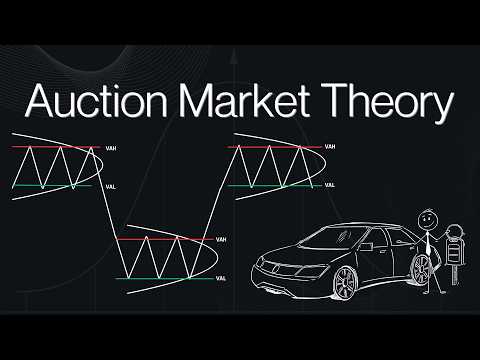

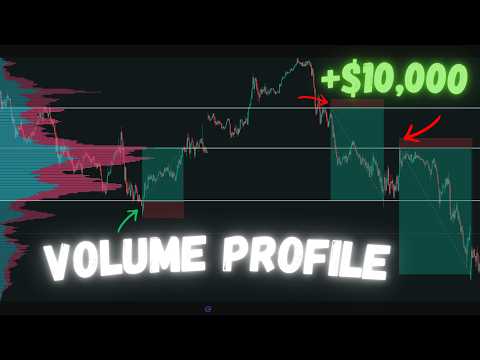
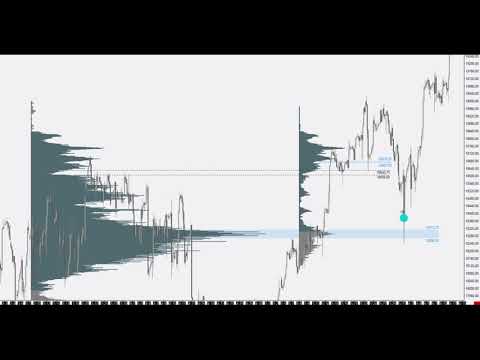

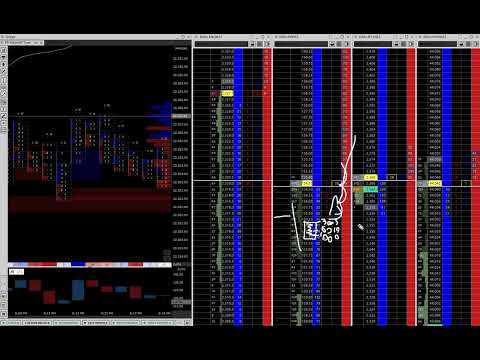

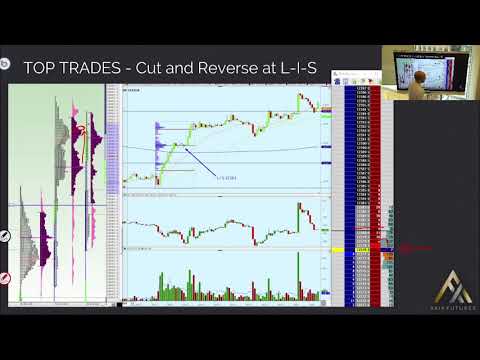
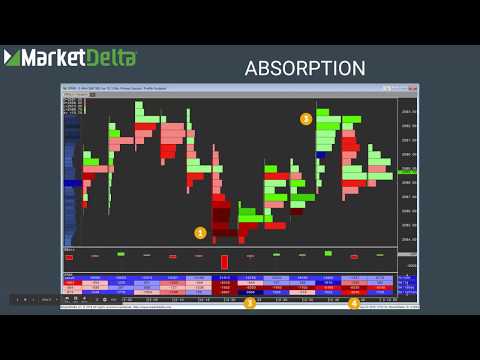
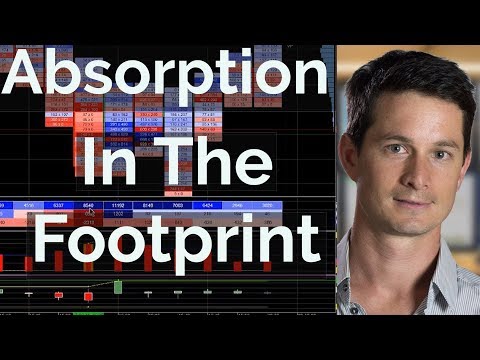



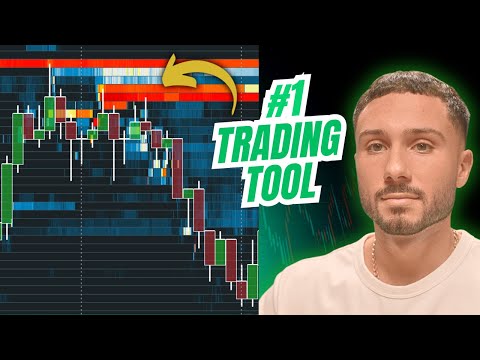
The YouTube channels worth following. Curated, not an exhaustive list, just the ones that consistently deliver quality education on orderflow, AMT, volume profile, and execution.
Curated external resources, course collections, and reference material worth bookmarking.